Vacuum Stress in Pets: Calm Training for Dogs & Cats
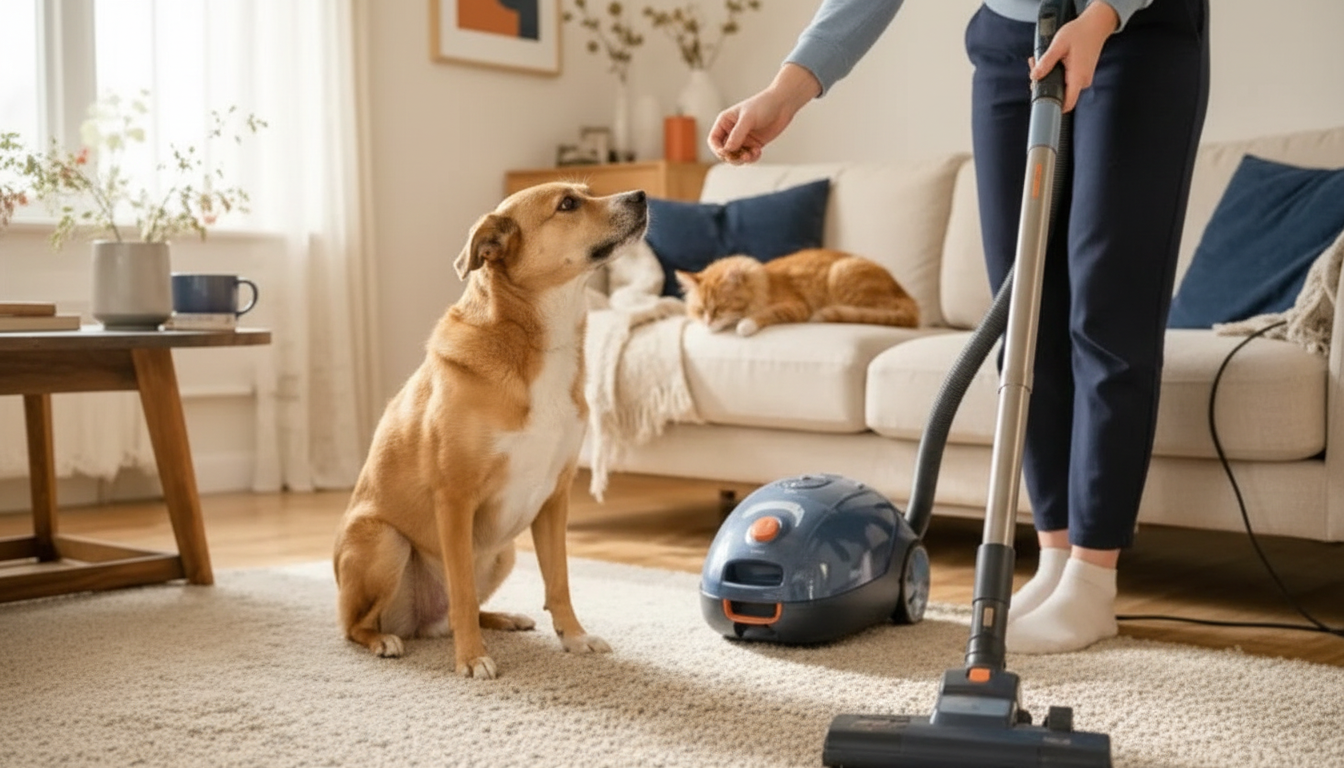
Helping Pets Handle Vacuum Stress: Calm, Training, and a Cleaner Home
Some pets treat the vacuum like a predator: the noise, movement, and sudden bursts of air can trigger fear, barking, hiding, or even defensive behavior. With a calm setup and a step-by-step plan, most dogs and cats can learn that vacuum time is safe—and even boring—so cleaning stops feeling like a household crisis.
Why vacuums stress pets
Vacuums combine several triggers that can feel intense to animals, especially those who are naturally noise-sensitive or easily startled.
- Noise sensitivity: High volume plus sharp start/stop sounds can startle dogs and cats.
- Unpredictable motion: The vacuum moves erratically from a pet’s perspective, especially when it changes direction quickly.
- Airflow and vibration: The rush of air, smell of dust, and floor vibrations can feel threatening.
- Past experiences: Slipping on hard floors, being bumped, or being chased away can build a negative association.
Stress signals to watch for (and when to pause)
The goal is to keep your pet “under threshold”—aware of the vacuum, but still able to eat treats, respond to you, and recover quickly. If the stress signals intensify, scale back before fear turns into panic.
- Dogs: Panting when not hot, tucked tail, whale eye, lip licking, pacing, barking/lunging at the vacuum, trying to herd or bite it.
- Cats: Flattened ears, low crouch, tail flicking, bolting to hide, hissing, dilated pupils, refusing to come out after cleaning.
- Pause the session if signs escalate: Trembling, refusal to eat treats, pinned ears with freezing, attempts to bite the vacuum or redirect onto people/pets.
Quick read: what to do when stress shows up
| Signal | What it can mean | Helpful response |
|---|---|---|
| Mild startle, then recovery | Surprised but coping | Lower intensity; reward calm; keep sessions short |
| Avoidance (hiding, leaving room) | Over threshold | Increase distance; provide a safe room; restart with quieter steps |
| Vocalizing/lunging at vacuum | Fear or defensive behavior | Stop movement; create separation; start desensitization from farther away |
| Refuses treats | Too stressed to learn | End session; try again later with a smaller step |
Set up the environment for success
Training goes faster when the home setup reduces “surprises” and gives your pet a clear way to feel safe.
- Create a predictable safe zone: A bedroom, crate, or covered cat hide with bedding, water, and a chew/toy.
- Use sound buffering: Close doors, run a fan or white noise, and vacuum in stages rather than the whole home at once.
- Reduce slippery footing: Rugs or runners can prevent panic if pets scramble on hard floors.
- Keep exits open: Avoid cornering a pet; fear increases when escape routes disappear.
A step-by-step plan to teach calm around the vacuum
Think of this as “vaccinating” your pet against vacuum stress—tiny, controlled doses paired with something good. Move forward only when your pet stays relaxed and can still take treats.
- Step 1 — Vacuum off, far away: Leave it in the room without moving; reward relaxed behavior (sniffing, calm sitting).
- Step 2 — Add motion without noise: Roll it a few inches, stop, reward; keep sessions under 1–2 minutes at first.
- Step 3 — Add sound at a distance: Turn it on in another room or behind a closed door; feed high-value treats during the sound.
- Step 4 — Gradually reduce distance: Only move closer when the pet stays relaxed and still takes treats.
- Step 5 — Combine real vacuuming with rewards: Short passes, frequent breaks, end before stress builds.
- If a pet is very noise-sensitive: Pair vacuum sessions with long-lasting chews (dogs) or lickable treats (cats) given only during vacuum time.
If your pet has a setback (for example, a loud clunk or an accidental bump), return to the last “easy win” step for a few sessions. Consistency beats speed.
Do’s and don’ts that prevent setbacks
For households with children, it’s also worth reviewing bite-prevention basics—fear can spill over into snapping if a pet feels trapped. The American Veterinary Medical Association (AVMA) guidance on dog bite prevention is a practical resource.
Special tips for dogs vs. cats
Dogs
Cats
If you’re working with a generally fearful dog, the RSPCA’s tips for helping a fearful dog align well with a gradual, reward-based approach.
When to get professional help
If you need specialized support, the American College of Veterinary Behaviorists directory can help you find a Diplomate in your area.
A practical resource to guide vacuum-time training
For a structured routine that’s easy to repeat, Helping Pets Handle Vacuum Stress lays out the process of building calmer habits around cleaning days—especially helpful in small spaces where “just vacuum when the pet’s outside” isn’t realistic.
Two complementary resources that can support calmer household routines include A Guide to Safe Space Mapping for designing reliable comfort zones, and Talk & Connect: Parent-Child Communication Workbook for strengthening family communication when a pet’s stress impacts the whole home.
FAQ
How long does it take for a pet to get used to the vacuum?
Many pets improve in days to a few weeks with short, consistent sessions that stay under threshold. Progress depends on your pet’s sensitivity, how gradual you are, and whether you avoid scary “big jumps” in noise or proximity.
Should pets be in the room while vacuuming?
Many pets do best with separation at first, using a safe room with water and enrichment. Training can be added gradually, but calm and safety come before keeping a pet nearby during cleaning.
What if my dog tries to attack the vacuum?
Create immediate distance and use barriers like doors or gates to prevent rehearsal of the behavior. Avoid punishment, and seek professional help if there’s biting, repeated lunging, or any redirection toward people or other pets.









Leave a comment